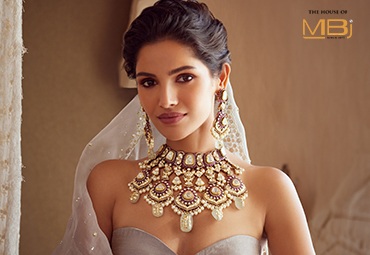
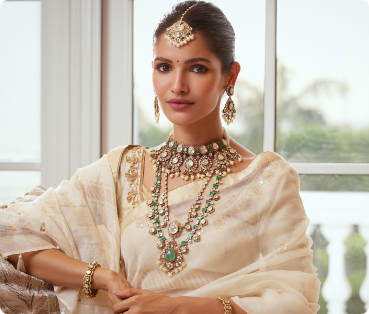
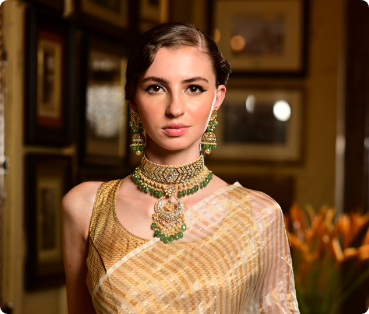
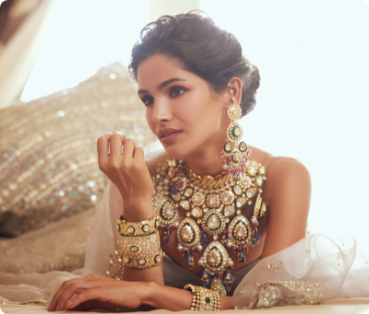
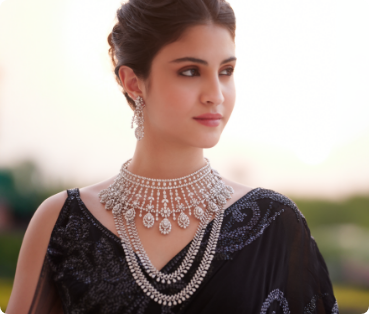
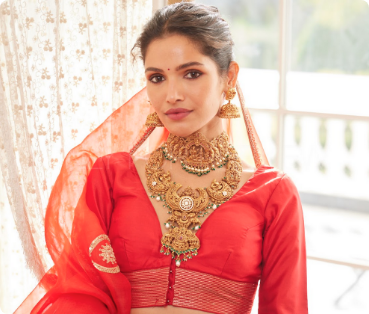
Temple Jewellery, Meenakari, Jadau — A Guide to Regional Indian Bridal Jewellery Styles
02 June I M.B. Sons JThe Question Every Bride Asks Eventually
You are sitting across from a jewellery salesperson, looking at pieces that all appear, to the untrained eye, to involve stones set in gold. He says this one is jadau. That one is polki. This is Kundan. That is Meenakari. The one behind the glass is temple jewellery. The price difference between them is significant. The visual difference, to someone seeing these styles for the first time, is not obvious.
This is the situation most brides and their families find themselves in, whether they are shopping for bridal jewellery in Kolkata, looking for bridal jewellery in Kolkata, or anywhere else across India. The terminology is used casually, sometimes interchangeably, and often inaccurately. Understanding what these words actually mean and what the differences are in terms of craft, value, and suitability for different occasions is the only way to make a decision you will be confident about.
This guide explains each major Indian bridal jewellery style, where it comes from, how it is made, and what kind of bride it suits best. It is designed to be the last guide you need before you walk into a showroom.
Jadau — The Foundation of North Indian Bridal Jewellery
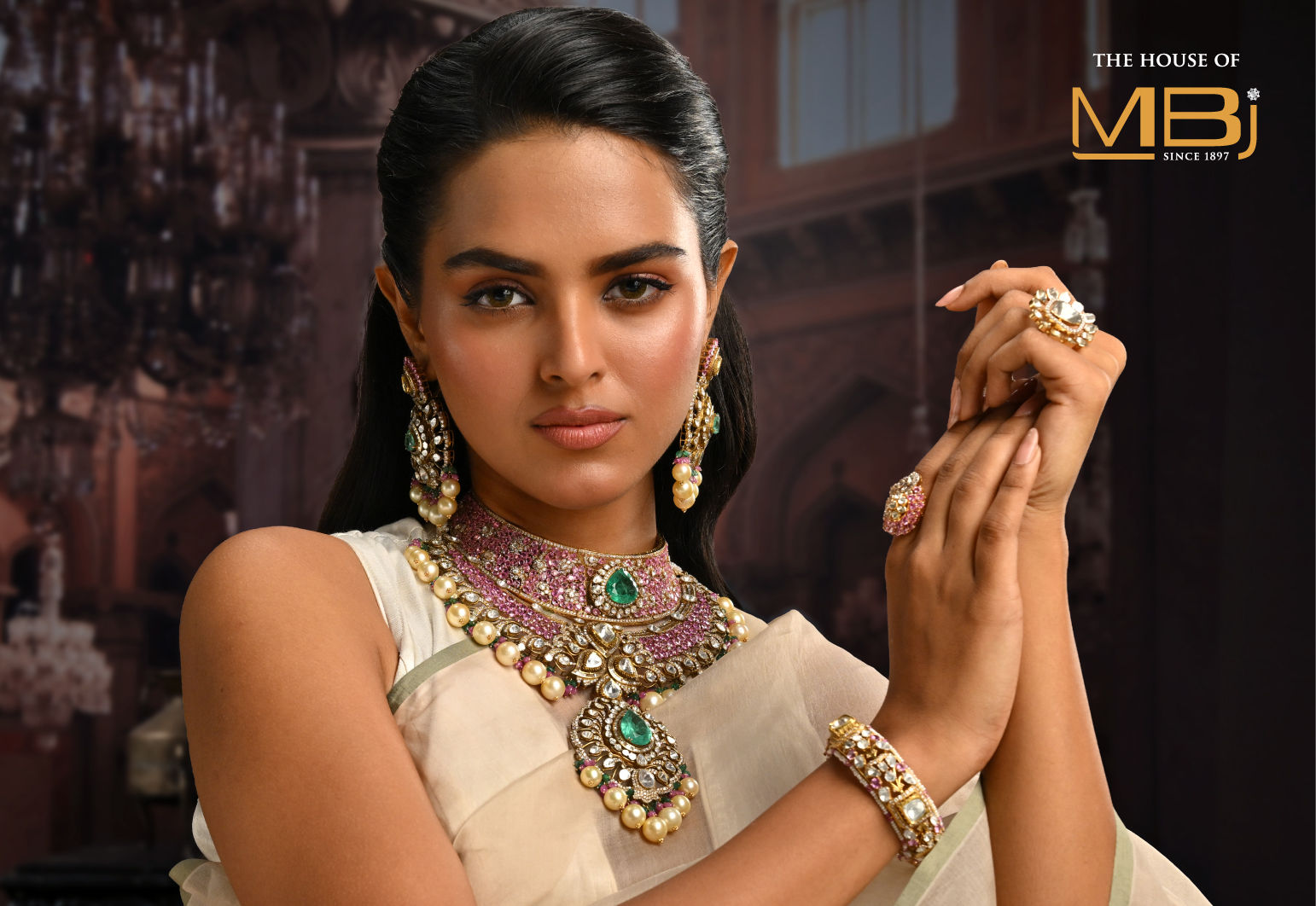
Jadau is not a style of jewellery. It is a technique. Specifically, it is the art of setting uncut stones, polki diamonds, emeralds, rubies, and sapphires directly into a gold framework without using any heat. The word jadau comes from ‘jadna’, meaning to fix or embed, and that is exactly what the process does: the stones are embedded into the gold by a craftsman (called a jadiya) who literally hammers the gold around each stone by hand.
What makes Jadau extraordinary and what makes it the defining characteristic of the best bridal jewellery in Jaipur is the result it produces. The stones are held securely without claws or prongs. The surface appears seamless, with stones and gold merging into a single flowing design. The technique is slow, requiring years of training, and no two pieces are exactly alike.
Jadau is the setting technique. The stones within a jadau piece can be polki diamonds, kundan glass, or precious stones. This is where much of the confusion in jewellery terminology begins.
Polki — The Uncut Diamond That Defines Rajasthani Bridal Jewellery
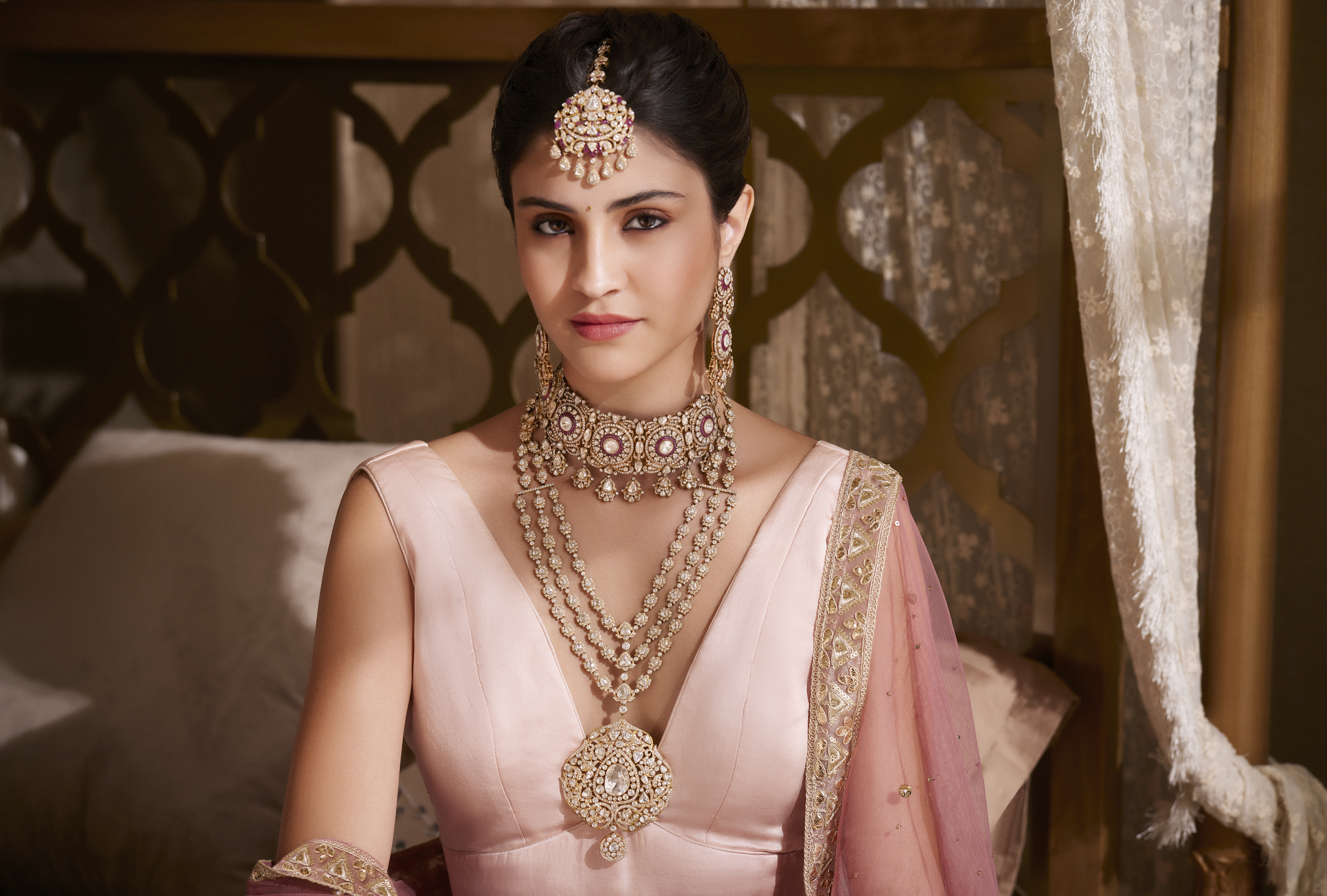
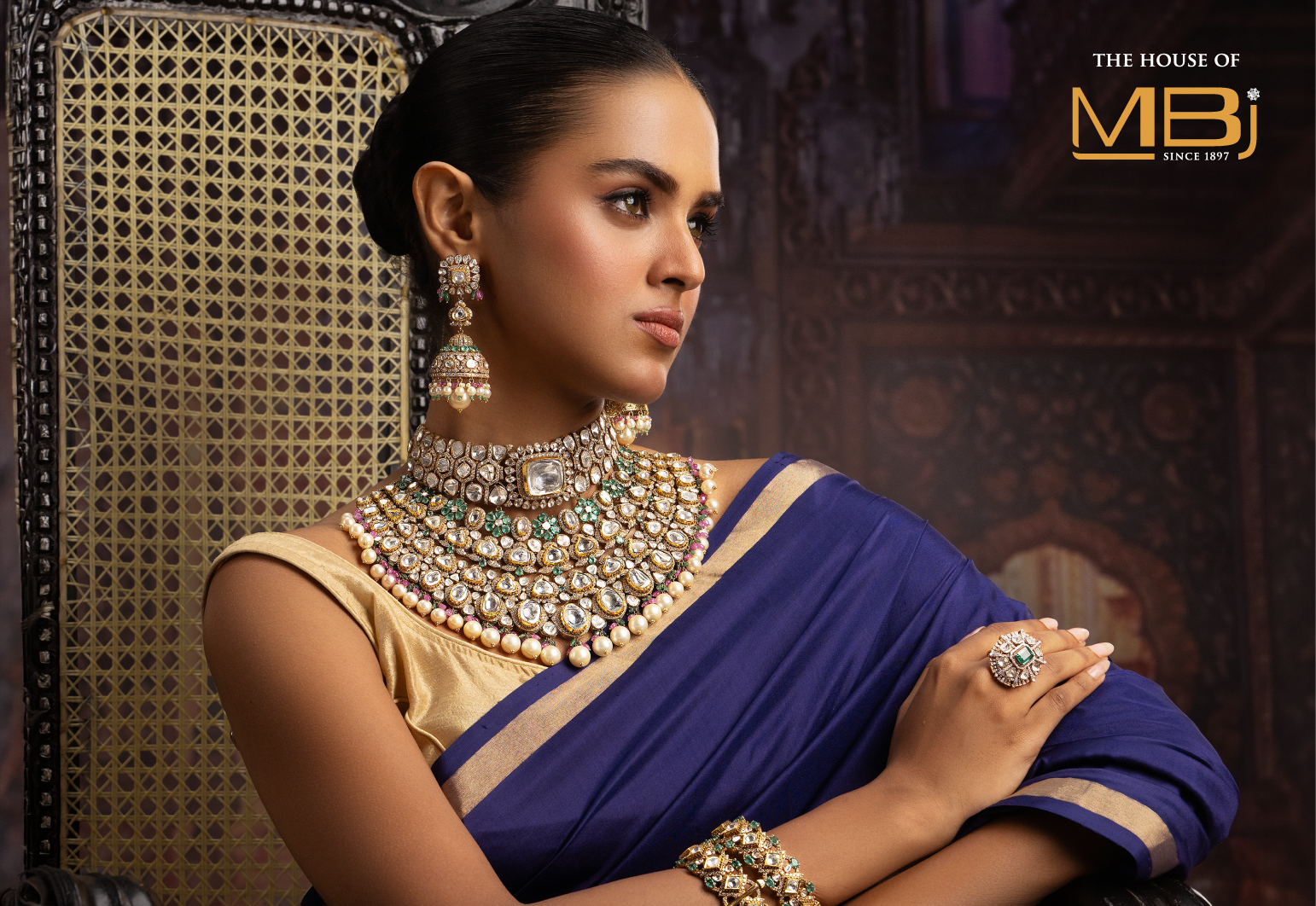
Polki is a diamond. Specifically, it is an uncut diamond, a diamond that has not been faceted into the modern brilliant cuts we associate with contemporary diamond jewellery. Polki diamonds are used as they are found: flat-bottomed, irregular-shaped, with a surface that reflects light in a soft, diffused glow rather than the sharp sparkle of a cut stone.
This quality, the warm, almost candlelit glow of polki, is precisely why it became the defining choice for traditional Indian bridal jewellery. At traditional Indian weddings, where lighting was predominantly oil lamps and diyas, polki jewellery glowed in a way that cut diamonds, which need direct light to sparkle, simply did not.
Polki is set using the jadau technique: the flat stone is placed on a silver foil backing, which amplifies the reflected light, and then enclosed in a gold setting that holds it without obscuring its face. The result is what families across Rajasthan, Delhi, and Haryana associate with wedding jewellery: warm, substantial, and unmistakably traditional. The best polki jewellery in Jaipur is distinguished by the quality of the diamonds used, the fineness of the gold setting, and the intricacy of the design.
Kundan — The Art of Glass and Gold
Kundan is frequently confused with polki because the finished pieces look similar. The key difference is that kundan uses highly refined glass stones, not diamonds or gemstones, set into pure 24-karat gold using a technique where molten lac (a natural resin) is poured into the gold framework to create a base, and the glass stones are pressed into that base before it sets.
The Kundan technique dates back to the Mughal court and is closely associated with the jewellers of Jaipur, who are considered its finest modern practitioners. The craft requires extraordinary precision; the gold must be pure, the lac must be correctly tempered, and the glass stones must be placed with absolute accuracy before the lac cools and sets permanently.
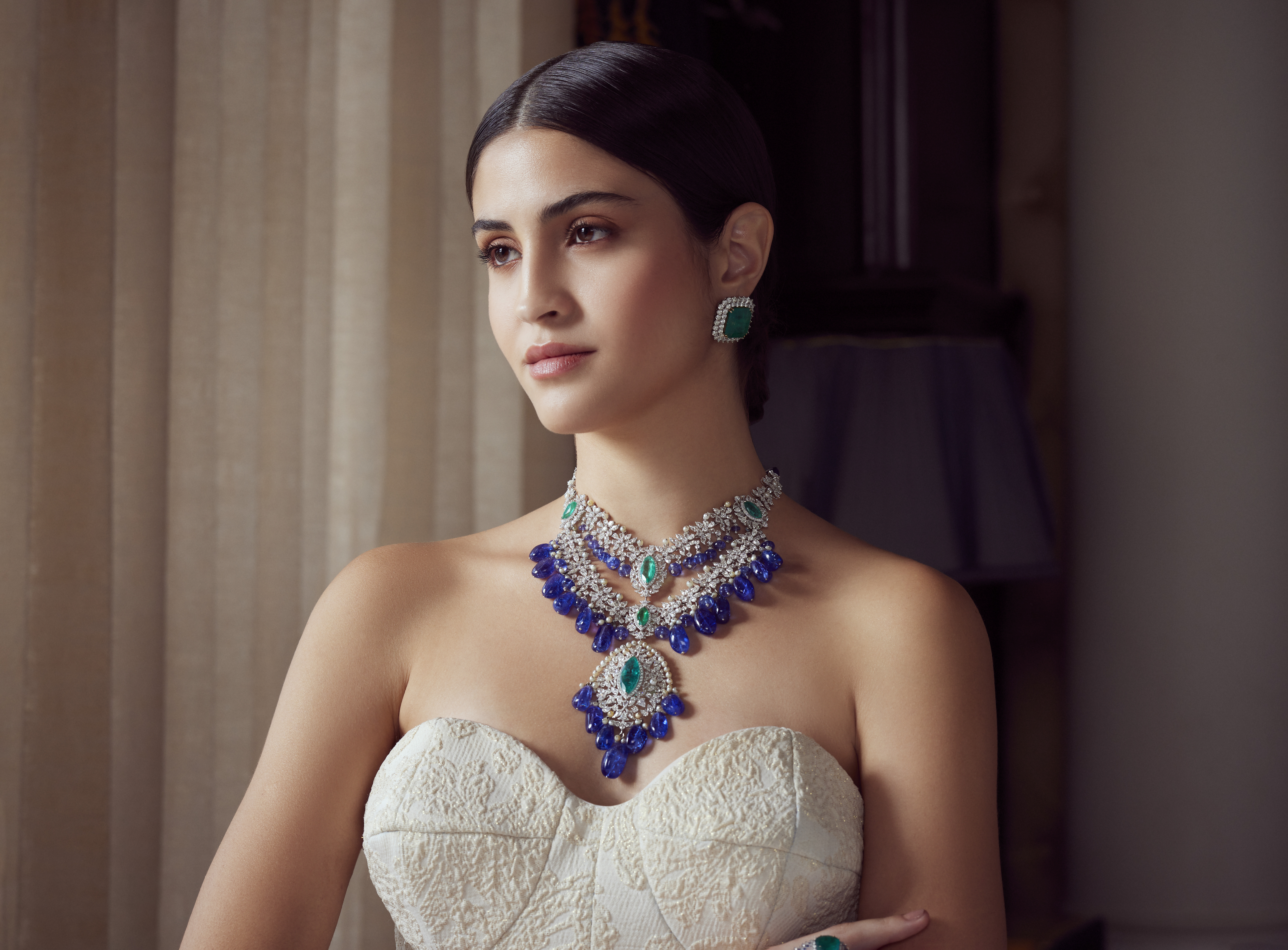
Kundan is not a compromise compared to polki. It is a different aesthetic choice. The glass stones used in fine kundan jewellery are hand-crafted to exact specifications, and the colour palette—emerald green, ruby red, and deep sapphire—is often more vibrant than precious stones at equivalent price points. Many brides from Rajasthan and Kolkata who want traditional jewellery choose kundan specifically for its colour.
Meenakari — The Colour on the Back
Meenakari is not a jewellery style in itself. It is a surface decoration technique that appears on the reverse side and sometimes the front of jadau and kundan jewellery. The word comes from the Persian ‘mina’, meaning enamel, and describes the process of fusing powdered mineral colours into the surface of metal at high temperature.
Jaipur is the undisputed centre of meenakari in India. The craft here has been practised for over four centuries, and the distinctive colour palette of peacock greens and blues, deep reds, and bright yellows is immediately recognisable. Turning a piece of Jaipur bridal jewellery over to reveal the meenakari work on the back is one of those moments that separates genuine craftsmanship from imitation.
When considering bridal jewellery from Jaipur, the quality of the meenakari is as important a quality indicator as the front-facing design. Finely painted meenakari, with clean colour boundaries and no visible cracking or uneven fusing, is the mark of skilled work. Rough or blurred meenakari is a sign that the piece was produced quickly.
Temple Jewellery — South India's Answer to Bridal Adornment
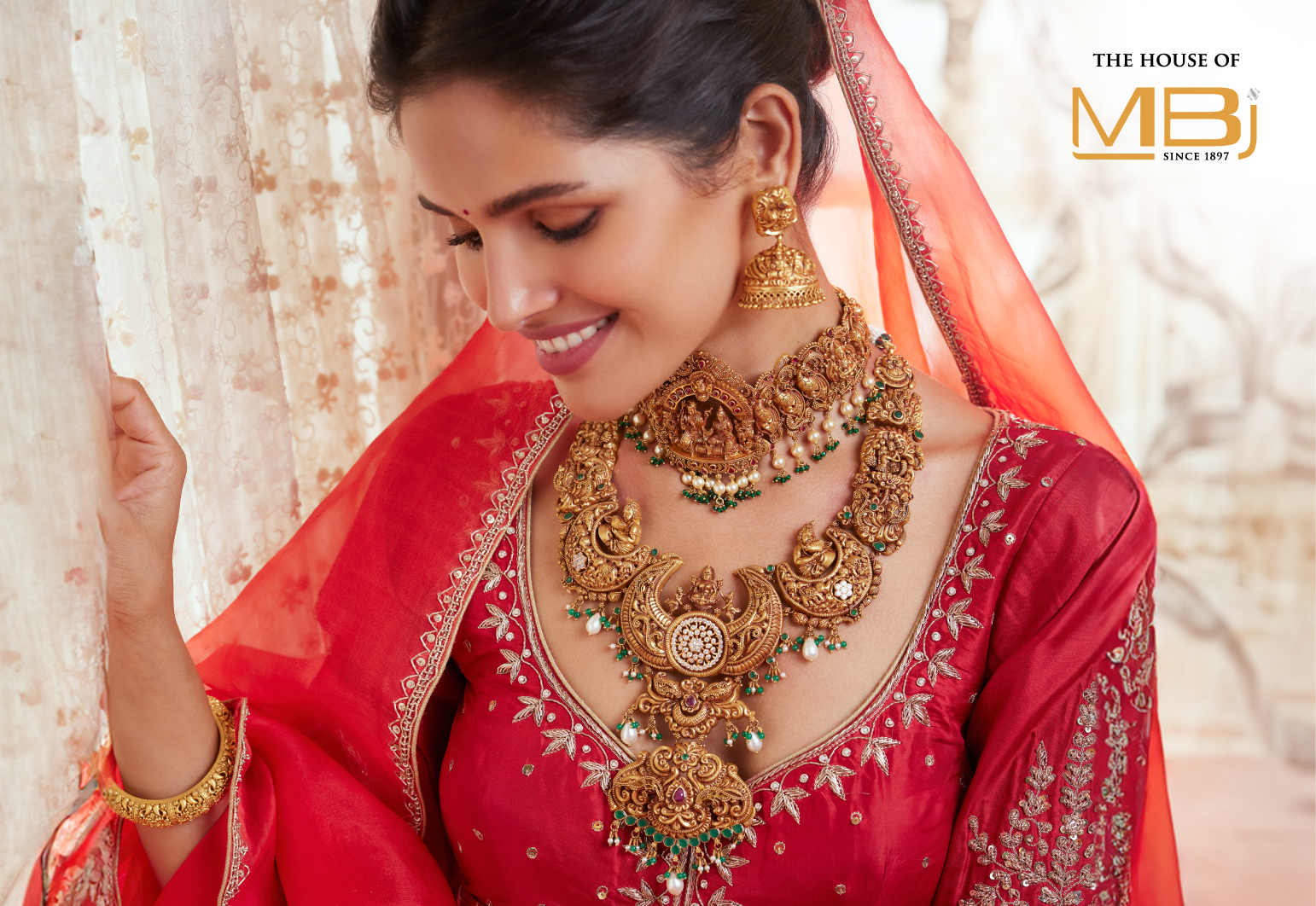
Temple jewellery comes from a completely different tradition. Originating in South India, particularly Tamil Nadu and Kerala, it was created for temple deities and the classical dancers who performed in their honour. The imagery is devotional: Lakshmi, Saraswati, peacocks, lotuses, and elephant motifs rendered in high relief.
Temple jewellery is typically made in gold, sometimes incorporating rubies and emeralds. The designs are bold, three-dimensional, and weighty. It is the opposite aesthetic of the delicate filigree often associated with North Indian jewellery.
Brides who come to us looking for bridal jewellery in Kolkata often ask about temple jewellery—it is deeply embedded in Bengali wedding traditions, and its gold-heavy aesthetic pairs beautifully with the red and white sari of a traditional Bengali bride. It is also increasingly popular among brides from North India who want one substantial piece, a long necklace or a pair of oversized earrings, that makes an unambiguous statement.
Diamond Bridal Jewellery — Contemporary Luxury with Enduring Value
Contemporary diamond jewellery, cut and polished, set in 18-karat gold or platinum, occupies a different place in the bridal conversation. It is not traditional in the way jadau or kundan is. But it holds its value, works for events beyond the wedding, and is increasingly the choice for brides who want jewellery they will wear regularly for years afterwards rather than pieces reserved for occasions.
Diamond jewellery in Jaipur from quality showrooms is graded and certified, which provides verifiable assurance of what you are buying. Families who prioritise financial value as much as aesthetic value often split their bridal jewellery investment between traditional jadau or kundan pieces for the wedding ceremony and diamond jewellery for the reception.
Which Style Is Right for You?
There is no single correct answer, and any showroom that tells you otherwise is working from a sales script rather than your interests. The right bridal jewellery style depends on three things: the wedding occasion and its visual context, the bride's personal aesthetic, and the way the family wants to balance tradition with longevity of use.
If you are having a traditional Rajasthani wedding and want to look completely authentic, polki jadau with meenakari details is the definitive choice. If you want vibrant colour alongside gold, choose kundan with meenakari. If you want something that travels well across traditional and contemporary contexts, choose diamond jewellery with gold. If you want a statement piece with deep cultural roots, choose temple jewellery for the reception.
At The House of MBj, we carry on these traditions, crafted in Jaipur, and make them available to families travelling from Delhi, Haryana, and across North India. Our team will take the time to walk you through each style and help you make a decision based on your wedding, your aesthetic, and the value you want the jewellery to hold beyond the wedding day, because the best bridal jewellery is not the most expensive. It is the piece that still moves you when you open the box twenty years later.